
Alongside being a Spanish teacher, I also teach English in Year 7 and one group in Year 8. Teaching English is a subject I truly appreciate, because it reminds me of my time teaching Spanish in Colombia.
When you teach a subject in students’ main school language, you are able to approach topics on a deeper level, ethically, emotionally, and critically. This is something that is often harder to achieve when working with a language purely as a foreign language, where communication itself can easily become the main focus instead of meaning.
Taking on this role in English has been one of the challenges of this new school year, but it has also been deeply fulfilling. I can clearly see that my students notice this shift, and they appreciate the space they are given to think, feel, and express themselves more freely.
What started as a regular reading activity in Unit 3 Creatures from the Peak textbook slowly turned into something much bigger and more meaningful than I first expected. The original plan was familiar: read a text, work with vocabulary, discuss key ideas, and move on. However, as we explored the theme of animals, zoos, captivity, and endangered species, it quickly became clear that the topic sparked strong emotions and thoughtful reactions among my students. Instead of stopping at comprehension questions, I decided to lean into their curiosity and emotional engagement.
For those interested, you can find an example of how I usually structure and plan this unit with my students in the link below, where I share the overall learning goals, activities, and progression we follow throughout Unit 3.
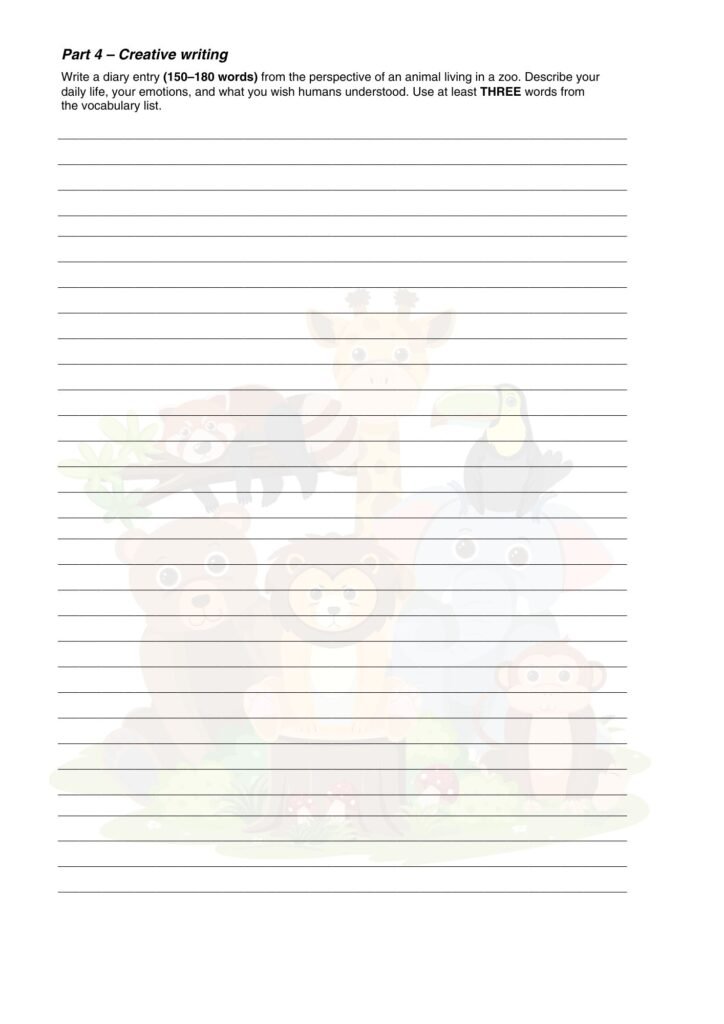
We then moved from reading to creative writing, where students wrote diary-style texts from the perspective of an animal living in a zoo. The focus was not on perfect grammar, but on voice, emotion, perspective, and message. Students were encouraged to reflect on what the animal feels, what it has lost, how it experiences humans watching it, and what “protection” really means. This shift immediately increased student engagement.
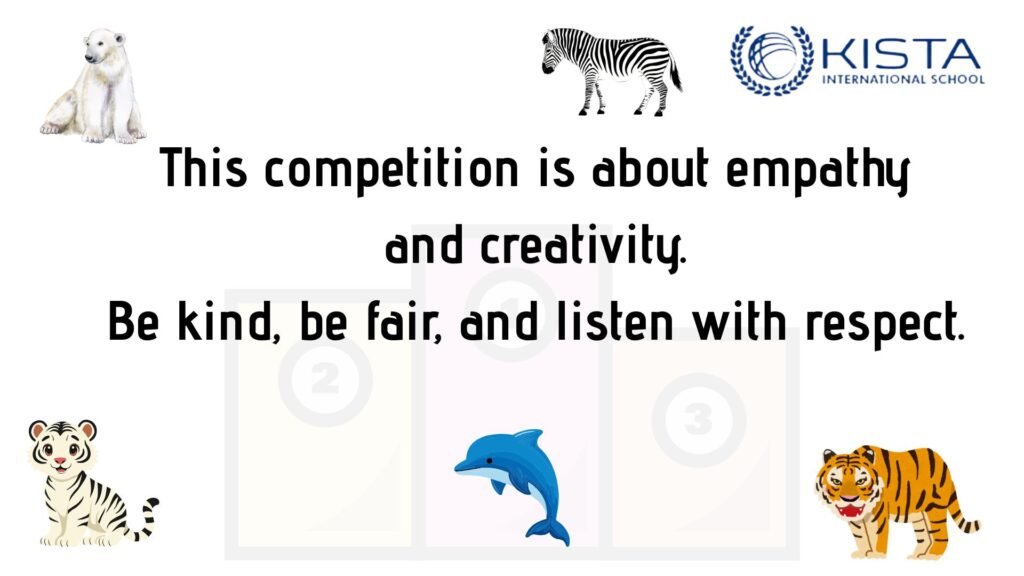
The project evolved further when students recorded their texts as anonymous audio stories, which we listened to together in class. This step changed the dynamic completely. Students were no longer only writers, but also active listeners, learning to listen with empathy, understand another perspective, and reflect rather than judge. After listening, the class voted for the story they found most powerful, not the most correct, which led to thoughtful and respectful discussions.
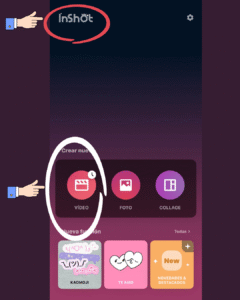
To ensure a fair and meaningful process, this part of the activity took place in several steps. First, the handwritten student texts were carefully transferred into digital format. Then, the manuscripts were brought into the app InShot, where the stories were turned into audio using voices supported by artificial intelligence. This allowed all texts to be shared anonymously and helped shift the focus entirely to the message and emotions rather than the identity of the writer. When it was time to vote, students were given a clear voting format and specific instructions to make sure the process was fair, respectful, and anonymous. This structure helped students take the task seriously and reflect thoughtfully on what they had heard.
You can see how I structured the entire project in the Canva link I am sharing below. I hope it can inspire you, and I would truly love to hear from you if you decide to try it out in your own classrooms.
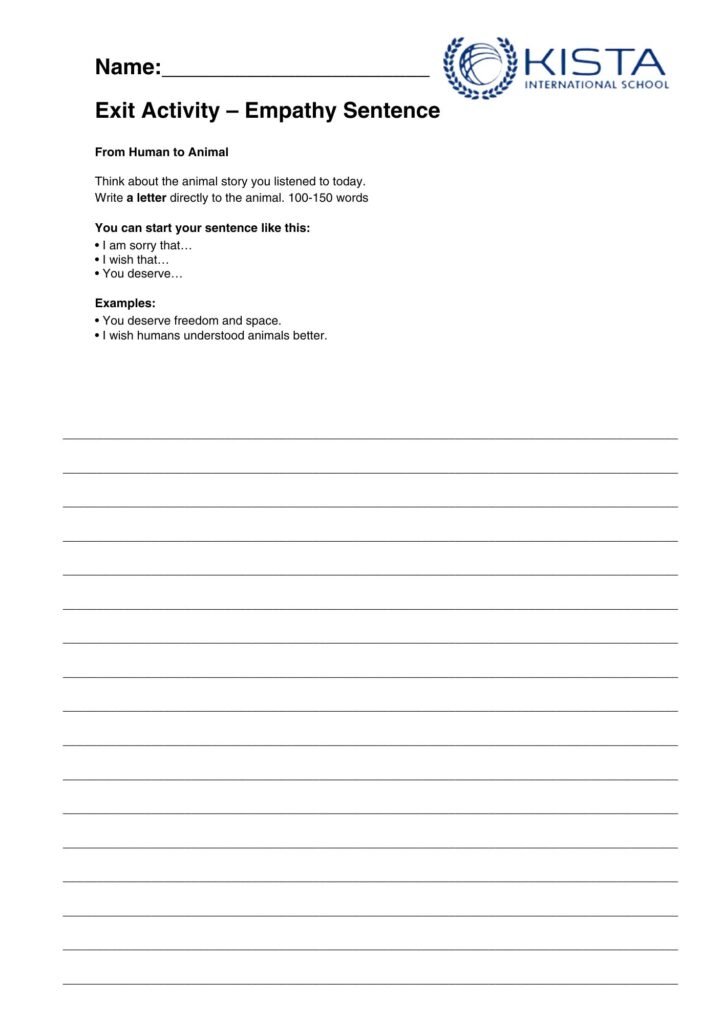
We closed the project with a short exit activity called Empathy Sentence: From Human to Animal. Students wrote one sentence directly to the animal they had listened to, beginning with phrases such as “I am sorry that…”, “I wish that…”, or “You deserve…”. This final moment allowed students to slow down and emotionally process what they had learned.
This experience showed clearly why the activity was successful. It grew naturally from the curriculum, respected students’ emotional responses, prioritised meaning over perfection, and gave students voice and responsibility. Most importantly, learning did not end in the classroom. Several students continued discussing the topic at home, showing how deeply they had connected to the work.
This project reminded me that some of the most powerful lessons are not the ones we plan in detail, but the ones we allow to grow with our students. A simple reading activity became a small creative project and, more importantly, a learning experience centred on empathy, awareness, and critical thinking.
If you are working with Peak Unit 3 or exploring themes such as animals, ethics, or human responsibility, I encourage you to try letting a lesson grow beyond its original plan. Start small, listen closely to your students, and allow space for creativity and reflection.
Feel free to adapt, reuse, or build on the ideas and resources shared here, and I would love to hear how similar approaches work in your own classrooms. Sometimes, the most meaningful learning begins when we are willing to experiment, slow down, and trust our students’ voices.
